
Thinking about buying a new home in Princeton or the greater Dallas/Fort Worth area? Whether you’re eyeing a cozy starter home or closing on your dream custom build, getting a professional home inspection ensures you know exactly what you’re stepping into. Stonebriar Property Inspections brings over ten years of boots-on-the-ground experience, a trusted BBB A+ rating, and deep knowledge of local building trends and conditions to every property we assess. Fully insured and licensed, we uncover the hidden issues others miss—including in that brand-new construction you’ve been told is “move-in ready.”
Our trained eyes catch both glaring flaws and subtle defects—from poor drainage and shoddy wiring to misaligned roofing and HVAC shortcuts. You’ll get clear answers, detailed reports, and no surprises after your purchase. Want to be 100% sure before signing on the dotted line?
Why Home Inspections Matter Before You Buy
Know What You’re Really Buying
At first glance, a home can look flawless—fresh paint, new fixtures, trendy finishes. But what’s beneath the surface? Hidden structural concerns, outdated wiring, or improperly installed HVAC systems don’t reveal themselves during open houses. A professional home inspection gives buyers clarity and uncovers issues that sellers may not even know exist.
In the Dallas/Fort Worth metroplex and places like Princeton, TX, Stonebriar Property Inspections identifies problems that range from minor maintenance concerns to critical safety hazards. We’ve found newly built homes with reversed hot and cold lines, missing insulation in attics, and incomplete flashing on roofs—all of which were signed off by city code.
Safeguard Your Investment
Buying a home means taking on future financial responsibility. When you understand the full condition of the property, you can plan for upcoming repairs and maintenance costs. This isn’t about scaring buyers—it’s about equipping them with knowledge. If the plumbing has corroded cast iron lines or the HVAC is eight years old with poor refrigerant levels, you’ll want to know that upfront, not in the middle of a July heatwave.
Knowing you need to budget for a new roof in the next 3-5 years saves you from getting blindsided. For most buyers, this kind of foresight refines the rest of the home buying equation—mortgage planning, renovation timelines, and even insurance premium estimates.
Leverage for Negotiation
Home inspections shift negotiating power to the buyer. Imagine walking into price discussions holding a detailed report outlining foundation settling, signs of wood rot around windows, or missing GFCI outlets. Suddenly you aren’t just asking for a price reduction—you’re presenting solid, documented reasons for it.
- Sellers may agree to make repairs before closing.
- Buyers might negotiate credits or reduced asking prices.
- In some cases, buyers use inspection results to walk away from risky deals before losing earnest money.
Stonebriar Property Inspections produces thorough, digital reports with prioritized recommendations, annotated images, and code compliance notes, which make those negotiations not only easier—but backed by a professional third-party opinion.
Align with Texas Building Standards
Texas does not require new homes to be inspected by a third party during the construction process. Municipal inspectors often focus on key elements during specific build phases, but their involvement is fast, high-level, and limited in scope.
Our inspections highlight where work done by subcontractors may not meet code or best practices. For example:
- Unsecured roof decking in a new build in Princeton.
- Improper grading that caused water to run toward—not away from—the foundation.
- Oversized circuit breakers connected to standard-gauge wiring—an obvious fire risk.
Real estate transactions in Texas—especially in high-growth markets like Princeton—move quickly. A qualified home inspection acts as your safety net. When Stonebriar Property Inspections walks a property, we bring deep local expertise and a sharp eye sharpened by years of inspecting homes across Collin County and the broader DFW area.
Trusted by Princeton Home buyers: Certified Local Expertise
Princeton, TX holds a unique mix of old Texas charm and rapid new development—whether you’re settling into a historic ranch-style home or buying a brand-new build near Lake Lavon. Knowing what to expect from your home means working with someone who knows the area. Stonebriar Property Inspections combines nationally recognized certifications with boots-on-the-ground experience right here in Princeton.
We Do More Than Just Show Up—We Understand Princeton Homes
Homes in Princeton aren’t built the same way as those in other parts of Texas. Many newer neighborhoods feature slab-on-grade foundations and energy-efficient upgrades, while older properties may have pier-and-beam construction that hides long-neglected issues. Our local inspection team understands the construction methods common to the area and knows what issues tend to appear where.
Ever wonder how the local soil affects foundation longevity? Or which siding materials perform best during our soaking spring rains and blasting summer heat? We’ve seen how Princeton’s clay-rich soil shifts the game on settling, and we know which construction shortcuts developers sometimes take during new builds along FM 982 or Beauchamp Blvd—because we’ve inspected them.
Texas-Certified, Nationally Accredited
Every inspector at Stonebriar Property Inspections is fully licensed under the Texas Real Estate Commission (TREC), having fulfilled the rigorous education, training, and fieldwork required under state law. We don’t stop there. Our team also holds certifications with the International Association of Certified Home Inspectors (InterNACHI), which means every inspection we deliver meets nationally accepted best practices—even when hyperlocal conditions call for more scrutiny.
- Texas Real Estate Commission (TREC) Certified: We follow official Standard of Practice guidelines for structure, safety, and system evaluations.
- InterNACHI Members: Our inspectors adhere to strict codes of ethics and standards, ensuring unbiased, thorough reporting.
- Specialized Southern Climate Knowledge: Humidity-induced mold, overloaded HVACs, attic insulation gaps—we know what causes them and where to find them.
Inspecting New Builds? Don’t Count on the Builder Alone
Homebuyers often assume that a recently built home means no problems. In fast-growing communities like Princeton, many houses go up on tight timelines, with sub-contractors juggling multiple jobs at once. Even with city permits signed off and builder warranties in place, issues like improper grading, unsecured ductwork, or missing attic insulation can go unnoticed—until you move in. We uncover those oversights before they turn costly.
Choosing Stonebriar means getting a second set of eyes—experienced, certified, and familiar with the terrain. Every Princeton property has a story. We make sure you know it before you close.
What a Comprehensive Residential Property Condition Assessment Actually Covers
Not every issue in a house can be seen at a glance—and that’s where a real residential property condition assessment delivers. At Stonebriar Property Inspections, we dive deep into the structure and systems of homes throughout Princeton, TX and across the Dallas/Fort Worth area. Our process targets over 500 individual checkpoints to deliver a full-spectrum review of your home’s condition.
What’s Actually Inspected? Here’s the Full Picture.
This level of detail goes beyond the basics. You’re not just getting a quick walkthrough—you’re getting a systematic evaluation designed specifically for residential properties. Here’s how we break it down:
- Structural elements: From the foundation to the framing, we look for visible issues and hidden indicators of future problems.
- Major systems: That means HVAC, plumbing, and electrical—all checked for functionality, installation quality, and wear.
- Roofing and attic spaces: We assess materials, drainage, insulation, and ventilation effectiveness.
- Interior rooms: Floors, walls, ceilings, doors, windows, and built-in appliances all go under scrutiny.
- Exterior features: Siding, grading, drainage, driveways, patios, and decks get an outside-in evaluation.
Each observation draws from standards set by the International Association of Certified Home Inspectors (InterNACHI), but we also apply regional insight specific to North Texas heat, soil conditions, and building code expectations.
How We Uncover Both Present and Future Concerns
Instead of waiting for something to break down, our inspectors identify early signs. Tiny cracks shifting door frames? That might signal foundation movement. Slight roof sag near eaves? That could foreshadow structural stress or poor flashing. The inspection combines visual cues with hands-on checks to reveal what’s functional now—and what looks like it won’t be for long.
And because our entire focus is on residential homes, there’s no guesswork. We know what issues commonly show up in recently built Princeton subdivisions, what decades-old homes in Historic McKinney tend to hide, and how builder shortcuts can show up in new construction across Collin County. That expertise leads to specific, actionable insights—no generic reporting.
Why It Matters Before and After You Move In
Planning on moving in or recently bought new construction in Princeton? Our home inspection includes a property analysis that ensures no part of the home gets overlooked. New doesn’t mean flawless. In fact, we often see issues like incomplete insulation, disconnected ducts, or improperly installed flashing in brand-new homes.
Stonebriar Property Inspections delivers a close-up look at the entire property so you get clarity, not surprises. Schedule your residential inspection today and see every corner of your future home—before they become an issue.
How Strong Is That Structure? Let’s Talk Real Stability
What Structural Integrity Evaluation Covers
Every home inspection Stonebriar Property Inspections performs in Princeton and across the Dallas/Fort Worth area includes a focused review of the property’s structural systems. This isn’t a quick glance at a few beams and calling it a day. It’s a methodical, point-by-point review of the framework that holds the house together—from the foundation to the framing.
Foundations: Where It All Begins
Slab-on-grade or pier-and-beam, the foundation tells a story. Our inspectors look for signs of movement, such as stepped cracks in the brick veneer, separations around windows and doors, and uneven floors. These indicators reveal whether the structure is settling naturally or facing significant shifting that could worsen over time. A visibly out-of-level slab isn’t just cosmetic—it can suggest compromised soil conditions beneath.
Beams and Load-Bearing Walls: The Backbone of the Home
In both existing homes and new construction, beams and load-bearing walls must align with architectural plans and show no signs of bowing, sagging, or stress. Our inspections check for the right type of support placement, consistent spacing, and signs of overloading. Misaligned support beams or alterations done without permits can lead to structural failures, especially in multi-story homes.
Wall Cracks and Framing: More Than Cosmetic Concerns
Hairline drywall cracks might seem minor, but their location and direction can point to bigger issues. Horizontal cracks or those wider than 1/8 inch will be noted and evaluated for deeper causes, such as shifting framing or moisture intrusion. During framing inspections in new builds, we check for proper nailing patterns, wood quality, and anchor placement—which builders sometimes rush or miss altogether.
What Do Signs of Structural Problems Look Like?
- Vertical or diagonal cracks in walls, especially above doors and windows
- Uneven or sloping floors that suggest foundation movement
- Doors or windows that won’t open or shut properly due to frame distortion
- Gaps between walls and ceilings, especially in corners
- Visible deflection in ceiling or floor joists
How This Impacts New Construction
A common misconception? New homes are problem-free. In reality, structural flaws often originate during construction phases—improperly cured concrete, rushed framing, incorrect header installations. Stonebriar Property Inspections performs phased inspections during new builds in Princeton and across DFW, catching mistakes before drywall conceals them. That means fewer repairs down the line, more builder accountability, and assurance the frame that holds your house up isn’t silently shifting underneath.
Want to walk the structure with us? We explain what we see in real-time, translating technical findings into actionable insights. Structural integrity isn’t just a checkbox—it’s the part of the home that everything else depends on.
Electrical System Evaluation: Powering Your Peace of Mind
Flip a switch, and the lights come on. Simple, right? Not always. If the home’s electrical system hides shoddy work or out-of-date components, it can lead to costly repairs—or worse, potential fire hazards. That’s why every home inspection conducted by Stonebriar Property Inspections in Princeton, TX and across Dallas/Fort Worth includes a thorough electrical system evaluation built for accuracy, safety, and code compliance.
More Than Just Wires and Breakers
Electrical issues often lie behind the walls, invisible to the untrained eye. During our evaluation, we uncover problems that could compromise both function and safety. What do we look at?
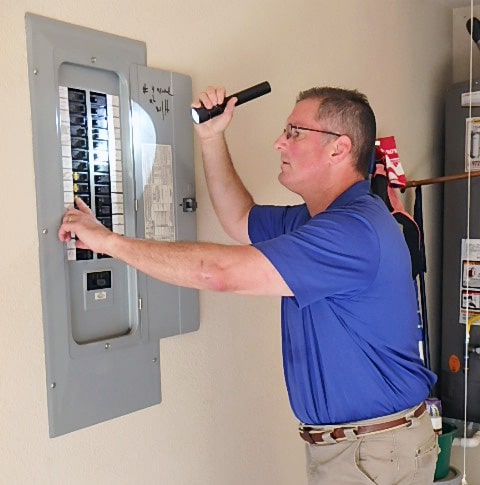
- Main Panel Inspection – We examine the electrical service panel to identify signs of overheating, excessive wear, oversized breakers, or improper labeling.
- Breaker Functionality – Each breaker must trip properly to shut off power during a fault. Our inspectors test functionality and evaluate load balance across circuits.
- Grounding and Bonding – Improper grounding creates electrocution risks. We ensure all systems meet NEC (National Electrical Code) grounding standards, including correct grounding electrode connections.
- GFCI & AFCI Outlet Testing – Kitchens, bathrooms, garages, and outdoor outlets must meet modern safety code. We test every GFCI and AFCI for correct operation and pinpoint any missing in required areas.
- Outdated Wiring Identification – From knob-and-tube to aluminum branch circuit wiring common in 1960s–70s builds, we flag materials known for overheating or failing under today’s appliance load demands.
- Exposed or Improper Connections – Junctions outside of code-compliant boxes or covered improperly? We document these violations with clear photo evidence, so they can be corrected before move-in day.
Electrical Surprises in New Construction? It Happens.
Think your new build in Princeton or McKinney won’t have electrical issues? Think again. Even new homes can include shortcuts—missing GFCIs, reversed polarity outlets, or panels not properly bonded to ground. Builders juggle subcontractors, and mistakes slip through. Stonebriar Property Inspections doesn’t miss them.
Ask your inspector: When was the last time you saw a perfectly wired home? You’ll get a shrug—because perfection rarely exists. Instead, our process ensures you know what you’re walking into with absolute clarity, breaker by breaker, outlet by outlet.
Digging Into the Details: Plumbing Inspection That Catches What You Can’t See
Leaks behind the walls. Pressure problems that don’t show up until it’s too late. Drainage systems just barely hanging on. A thorough plumbing inspection brings all of it to light—before you commit to a purchase or realize too late that your brand-new home wasn’t finished properly.
Stonebriar Property Inspections examines every accessible water system component in homes throughout Dallas/Fort Worth and Princeton, TX. Whether you’re buying a resale or moving into new construction, our plumbing inspection finds issues that other eyes miss.
What We Inspect in the Plumbing System
- Water Supply Lines: We check for visible corrosion, improper joints, and signs of aging in copper, PEX, or PVC lines. Mineral deposits and discoloration get special attention.
- Valves and Shut-offs: Function and placement matter. We verify that all fixtures have working shut-offs and that main valves are accessible and operating correctly.
- Drains and Waste Lines: From kitchen sinks to bathroom tubs, we assess how well drains clear. If drain lines sound hollow or struggle to evacuate water, something’s wrong—that’s when we dig deeper.
- Water Pressure: Too much pressure wears out pipes and appliances faster. Too low, and showers suffer. Using a pressure gauge, we measure the PSI at various fixtures to confirm it’s within the normal range (typically 40–80 PSI in Texas homes).
- Leak Detection: We scan for current leaks and evidence of past leaks around toilets, under sinks, behind appliances, and near the water heater. Even minor moisture trails can indicate a long-term issue.
Checking for Code Compliance
Homes in Texas must comply with the International Residential Code (IRC) and local amendments adopted by each municipality. In Princeton and the wider DFW area, updated codes require specific drain slope angles, approved P-traps, air gaps on dishwashers, and anti-siphon backflow valves in exterior faucets.
We identify construction shortcuts or overlooked installations that violate these plumbing standards—especially common in new builds. Builders don’t always catch every sub-trade oversight. We do.
Planning to move into a newly constructed home? Don’t rely on the builder’s word alone. Let Stonebriar Property Inspections validate your plumbing system with a complete, standards-based review before you sign anything.
HVAC System Check: Keeping Comfort Reliable Across Texas Seasons
When summer scorches the Dallas/Fort Worth area or chilly fronts drift through Princeton, TX, the HVAC system does more than just regulate temperature—it defines livability. During a home inspection with Stonebriar Property Inspections, the heating, ventilation, and air conditioning components undergo a detailed evaluation to ensure year-round comfort isn’t theoretical, but guaranteed.
What Gets Inspected?
The process begins with a top-to-bottom look at every visible HVAC component. Technicians focus on:
- Heating units: Gas furnaces, electric heat pumps, and radiant heating get put through performance checks, verifying proper ignition, airflow, and output.
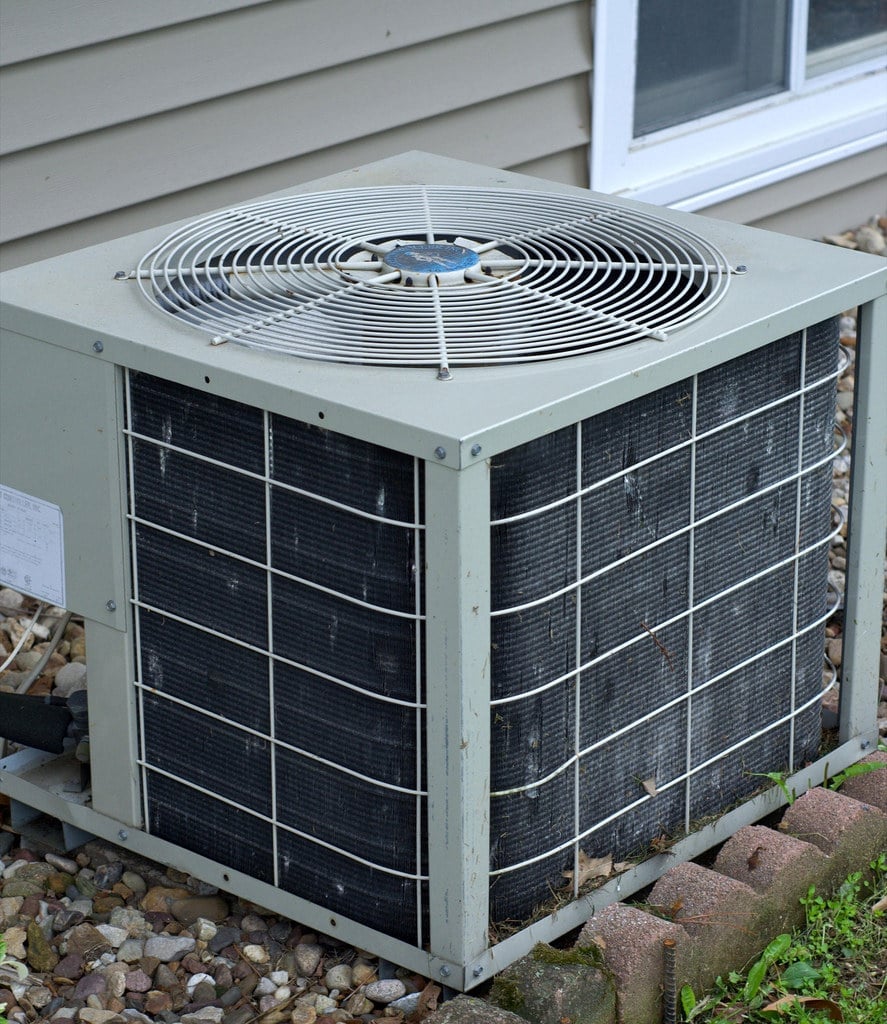
- Air conditioning components: Inspectors test the condenser, evaporator coils, fan motors, and refrigerant lines. Operational stress tests reveal hidden inefficiencies.
- Thermostats: They assess calibration, programmable settings, and overall integration with the system to confirm temperature control is consistent and measurable.
- Ductwork: Bent supports, insulation issues, seal breaks, and airflow restriction often hide in attics or crawlspaces. A visual inspection pinpoints airflow bottlenecks that drive up utility bills.
Why HVAC Age and Performance Matter
A 15-year-old A/C unit sitting under a thick layer of dust might still power on, but it won’t deliver energy efficiency or climate control. That’s where load testing comes in. During the inspection, each system component is activated under normal operating conditions. This step helps identify weak performance, strange noises, unbalanced air distribution, or systems nearing the end of their service life.
In Princeton’s fluctuating Texas climate, functional HVAC isn’t a nice-to-have—it defines utility cost, resale value, and family comfort from day one. Homes with failing thermostats or inefficient duct routing often face 20–30% higher annual cooling costs, according to data from the U.S. Department of Energy.
New Doesn’t Mean Flawless
Even in new constructions, HVAC issues show up more often than expected. Sometimes it’s an overlooked duct seal, other times an improperly sized unit. Stonebriar Property Inspections provides thorough assessments on new-build homes in Princeton, ensuring that systems meet industry standards and operate under optimal conditions from day one.
Roof and Attic Examination: The Overhead Check You Can’t Skip
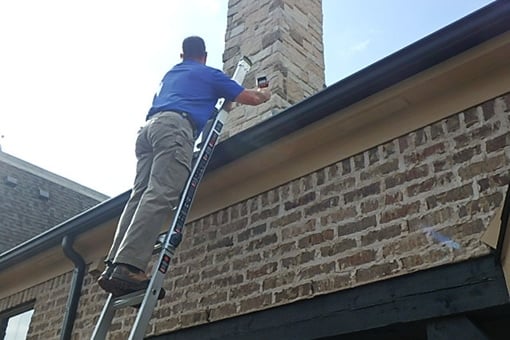
Roofs don’t just sit on a house; they defend it. When Stonebriar Property Inspections steps onto a ladder or shines a light into an attic, we’re assessing more than surface wear—we’re uncovering potential financial burdens hiding in plain sight. Whether you’re buying an older home in Princeton, TX or a freshly built property in Dallas/Fort Worth, roof and attic inspections expose costly vulnerabilities you can’t afford to miss.
What’s Happening Overhead?
The harsh North Texas climate puts relentless pressure on roofing systems. From triple-digit heat waves to hailstorms rolling through Collin County, your shingles take a beating. During an inspection, here’s what gets our full attention:
- Shingle Damage and Aging – We check for curled, cracked, or missing shingles, along with signs of granule loss. These indicators often lead to leaks and insulation damage.
- Flashing and Seal Quality – Poorly installed or deteriorating flashing around chimneys, vents, and valleys invites slow leaks that often go unnoticed until major repairs are needed.
- Underlayment Condition – Beneath the shingles lies a waterproof layer that provides backup moisture protection. Saturated or torn underlayment compromises the entire system.
- Ventilation Assessment – Without proper airflow, attics trap heat and humidity. We evaluate ridge vents, soffit vents, and gable ventilation to confirm whether air is moving freely or stagnating inside.
Signs That Tell a Bigger Story
Inside the attic, the clues get personal. Water stains on rafters or insulation don’t just hint at past leaks—they suggest that moisture’s been working silently for months. If decking shows rot or you’ve got insulation that’s compressed, damp, or mold-streaked, the damage has already started. We also look for evidence of prior patchwork or hasty repairs. These shortcuts usually hide more than they fix.
New Construction? Same Risks.
Think a newly built home in Princeton is immune? Not even close. We’ve inspected plenty of just-finished homes and found improperly installed shingles, missing flashing, and blocked ridge vents—all before anyone has even moved in. Builders may hit code minimums, but that’s not the same as performance over time. A full inspection from our team at Stonebriar gives new homeowners leverage before warranty deadlines close or insurance claims turn into finger-pointing contests.
In every roof and attic evaluation, we aren’t just documenting conditions—we’re zeroing in on what’s about to become the next big problem if it stays untouched. That’s peace of mind overhead, delivered with a sharp eye and a detailed report.
What’s Really Going on Outside: Exterior and Foundation Review
Walls don’t crumble overnight. Foundations don’t just crack in silence. The truth lives in the materials, the soil, and the slope—and that’s exactly where Stonebriar Property Inspections focuses during an exterior and foundation review.
In Princeton and across the Dallas/Fort Worth metroplex, homes face shifting clay soils, sudden storms, and wide temperature swings. These elements don’t just affect your landscaping—they penetrate structures from the outside in. Our inspectors read those signals, documenting everything that matters before it becomes a costly surprise.
We Start with the Big Picture—Then Zoom In
- Siding and trim: We inspect vinyl, brick, hardboard, or stucco siding for separation, cracking, warping, and signs of water infiltration. Edge details around windows and doors give clues about weather resistance—or the lack of it.
- Eaves, soffits, and fascia: These are functional and aesthetic elements, but poor ventilation or water damage here often signals attic humidity problems or roof drainage failure.
- Gutter systems: We trace the flow. Gutters full of debris or sloped incorrectly can send water straight down your foundation wall. Expect our findings to include specific drainage behavior, not just whether gutters are attached.
Where Ground Meets Structure: The Make-or-Break Zone
Gutters alone don’t protect a foundation. It’s the orchestration of elements—grading, soil type, and structural seams—that tells us whether a home stands solid or is on the edge of a problem.
- Grading and soil conditions: Flat or backward-sloping soil brings surface water toward the house, not away. In new home construction, we often find incomplete grading or compacted soil around the property that hides drainage issues.
- Movement markers: We examine stem walls and visible foundation edges for step cracking, separation at corners, or bulging. Consistent soil pressure leaves a story in concrete, and we know how to read it.
- Pooling or standing water: Even in seemingly dry weather, evidence of water accumulation—like algae trails, washed-out mulch beds, or muddy impressions—can tell us where runoff consistently gathers and saturates the foundation site.
For new homes in Princeton, it’s common to find exterior issues builders missed: downspouts that empty too close to the house, settlement cracks misinterpreted as cosmetic, or improperly installed flashing. These might seem minor until the first major Texas rain finds its way into your crawl space or slab edge. That’s why a complete exterior and foundation review remains a core component of every home inspection Stonebriar performs.
Pest and Termite Inspection: Finding the Hidden Destruction
In the heart of Texas—where warm, humid conditions create a paradise for termites and other wood-destroying insects—pest inspections can’t be skipped. Especially in places like Princeton and broader DFW, ignoring this step allows infestations to grow unseen, silently consuming your investment from the inside out.
Signs You Don’t Want to Miss
Walk into a home and you won’t always see the problem. Termites don’t march in plain sight wearing warning labels. Instead, look for these less obvious red flags:
- Hollow-sounding wood when tapped—termites often eat from the inside out.
- Mud tubes running along foundation walls—these provide safe travel ways for subterranean termites.
- Frass—termite droppings that resemble sawdust or coffee grounds.
- Swarmers or discarded wings near windows—evidence of a colony taking flight.
Each of these signs points to deeper structural risks hidden beneath the surface. Infestations, particularly from subterranean termites, can destabilize support beams, flooring, and joists—without triggering any immediate visual clues. The damage compounds over time, even in new construction where builders fail to catch early vulnerabilities.
Why a Pest Inspection Isn’t Optional in North Texas
Termites thrive in the mild winters and muggy springs of Collin County. According to the National Pest Management Association, termites cost U.S. homeowners over $5 billion annually. Texas ranks among the top states for termite pressure, especially from Eastern subterranean termites, and the challenge only intensifies in new housing developments where soil disturbances create ideal nesting conditions.
That brand-new home in Princeton isn’t immune. In fact, Stonebriar Property Inspections has found active infestations in homes completed just months before. Builders rarely include comprehensive pest assessments in their final walkthroughs, leaving new homeowners exposed from day one. Combining thermal imaging and physical inspection techniques, our team uncovers what others miss—before it becomes a costly repair.
The only way to verify a house is free from hungry invaders? A detailed pest inspection conducted alongside your home inspection. Stonebriar Property Inspections covers this essential service across the Dallas/Fort Worth area and in Princeton, TX, catching infestations before they compromise your structure and savings.
Keeping It Safe: Code Compliance and Regulatory Checks in Princeton, TX
Meeting Building Codes Isn’t Optional—It’s Required
Every home, whether a century-old farmhouse or brand-new construction, must meet current Princeton, TX building codes. These codes aren’t just paperwork; they exist to keep occupants safe and homes durable under local conditions. Stonebriar Property Inspections reviews every property in line with the latest municipal requirements. From structural rules to safety mandates, nothing gets overlooked.
What We Look For During the Safety and Code Compliance Review
You might be surprised by how many newly built homes skip essential safety features or implement them incorrectly. Stonebriar Property Inspections takes the time to verify that your home checks every box.
- Smoke Detectors: We check placement, operability, and whether interconnected detectors are present where required—in hallways, bedrooms, and near living spaces.
- Fire Egress: Windows in sleeping areas must allow fast escape. We measure size, height from floor, and ensure they’re not obstructed.
- Stair Safety: Stair rise and run must fall within acceptable dimensions, and stair railings must be structurally sound and properly installed.
- Electrical Panel Labeling and Grounding: Every circuit must be clearly labeled. Grounding and bonding must be accurate and code-compliant.
New Construction? Still Needs an Inspection
A home’s newness doesn’t guarantee perfection. Municipal inspectors focus on building permit compliance—but they don’t spend hours inspecting details like smoke detector wiring or stair geometry. Stonebriar Property Inspections goes room-by-room and system-by-system, checking what the city’s certificate of occupancy might have missed. We serve homeowners throughout the Dallas/Fort Worth metroplex, including Princeton, with full regulatory reviews for brand-new builds.
Upgrade Recommendations That Make Sense
If something isn’t code-compliant, you’ll know why. We don’t just document; we explain. Whether that means adding a carbon monoxide alarm within 10 feet of bedrooms or adjusting handrail height to meet code, we deliver actionable guidance, not vague suggestions.
Mold and Moisture Detection: Finding What the Eye Can’t See
Water doesn’t have to come pouring through the ceiling to cause problems. In houses across Princeton and the greater Dallas/Fort Worth area, mold often forms in spaces that stay damp, dark, and unnoticed. That closet under the stairs? The air handler closet in the hallway? Even a well-finished attic can trap moisture. Mold and hidden dampness threaten not just the home’s structure, but air quality, too.
Technology Finds What’s Hidden
Visual checks only go so far. Stonebriar Property Inspections uses advanced diagnostic tools like moisture meters and thermal imaging to locate moisture behind walls, under floors, or in ceilings—places drywall hides but mold thrives.
- Moisture Meters: Spot-check high-risk zones like around windows, behind toilets, under sinks, or along baseboards for elevated moisture content not evident to the touch.
- Thermal Imaging Cameras: Detect temperature differences that suggest dampness or hidden leaks. A cooler wall section behind a shower might indicate water intrusion long before staining appears.
- Sight and Smell: While tools give data, human observation adds context. Discoloration, warping trim, moldy smells—none of these are ignored.
Understanding Why Mold Shows Up
Where there’s persistent moisture, there’s a good chance mold spores will follow. North Texas humidity, combined with poor ventilation—especially in bathrooms, laundry rooms, and attics—creates prime conditions. Sometimes the cause is obvious: a leaking pipe or roofline flaw. Other times, a backdrafting vent or clogged HVAC drainline builds up slow, consistent dampness.
Better Ventilation, Better Outcomes
Inspection doesn’t stop at discovery. Stonebriar inspectors don’t just report moisture presence—they assess the source. Is the exhaust fan venting into the attic instead of out the roof? Has insufficient bathroom ventilation caused wall condensation behind the paint?
If you’re buying a home in Princeton or around the DFW metroplex, don’t assume new construction won’t have hidden damp spots. Builders can cut corners on ventilation or poorly seal building envelopes. A moisture and mold assessment by Stonebriar Property Inspections reveals these issues before they become health hazards.
Curious about what’s hiding behind the drywall? During an inspection, you’ll see it all in the report—infrared images, moisture readings, and clear guidance about next steps.
Home Energy Efficiency Evaluation: Find Out Where Your Home’s Wasting Energy
Not every issue in a home makes noise or leaks. Some just trickle money off your energy bill every month without making a sound. That’s where a home energy efficiency evaluation steps in. At Stonebriar Property Inspections, we go beyond identifying foundation cracks or faulty wiring—we uncover silent inefficiencies that drain your wallet and reduce comfort.
Where Energy Loss Happens in Most Homes
A typical American home loses 20% to 30% of its heating and cooling energy through air leaks, poor insulation, and outdated windows, according to the U.S. Department of Energy. Our Princeton-based inspection team focuses on locating these common culprits.
- Insulation Gaps: We check attic spaces, crawlspaces, and walls for outdated or insufficient insulation. Incorrect R-values or compressed materials significantly reduce thermal efficiency.
- Window Performance: Single-pane designs, failed seals in double-glazing, and frame gaps contribute both to high bills and year-round discomfort.
- HVAC Efficiency: Undersized or overworked systems cost more to operate and wear down faster. We evaluate age, condition, and sizing accuracy.
- Appliance Energy Draw: Older refrigerators, water heaters, and laundry machines pull excessive electricity. We pinpoint models contributing to peak loads.
Immediate Improvements That Boost Value
Even in new construction, energy waste can lurk behind drywall. Stonebriar Property Inspections frequently finds homes in the Princeton area where ductwork isn’t properly sealed, thermostats are poorly placed, or insulation wasn’t installed evenly. These aren’t minor flaws—correcting them adds measurable value and boosts comfort year-round.
We provide you with a list of high-impact modifications tailored to your home. Want to explore federal tax credits for energy-efficient upgrades? We’ll guide you toward areas where those incentives apply, especially in HVAC and window improvements.
Homeowners in Princeton: Ready to Cut Monthly Costs?
Think your home is already efficient enough? Challenge that idea. Stonebriar’s inspections have uncovered everything from reverse-wired thermostats to attic fans that actually pull conditioned air outside. If you’re buying, building, or just trying to stay ahead of energy costs in Princeton or anywhere in Dallas/Fort Worth, we’re ready with answers you won’t find on a utility bill.
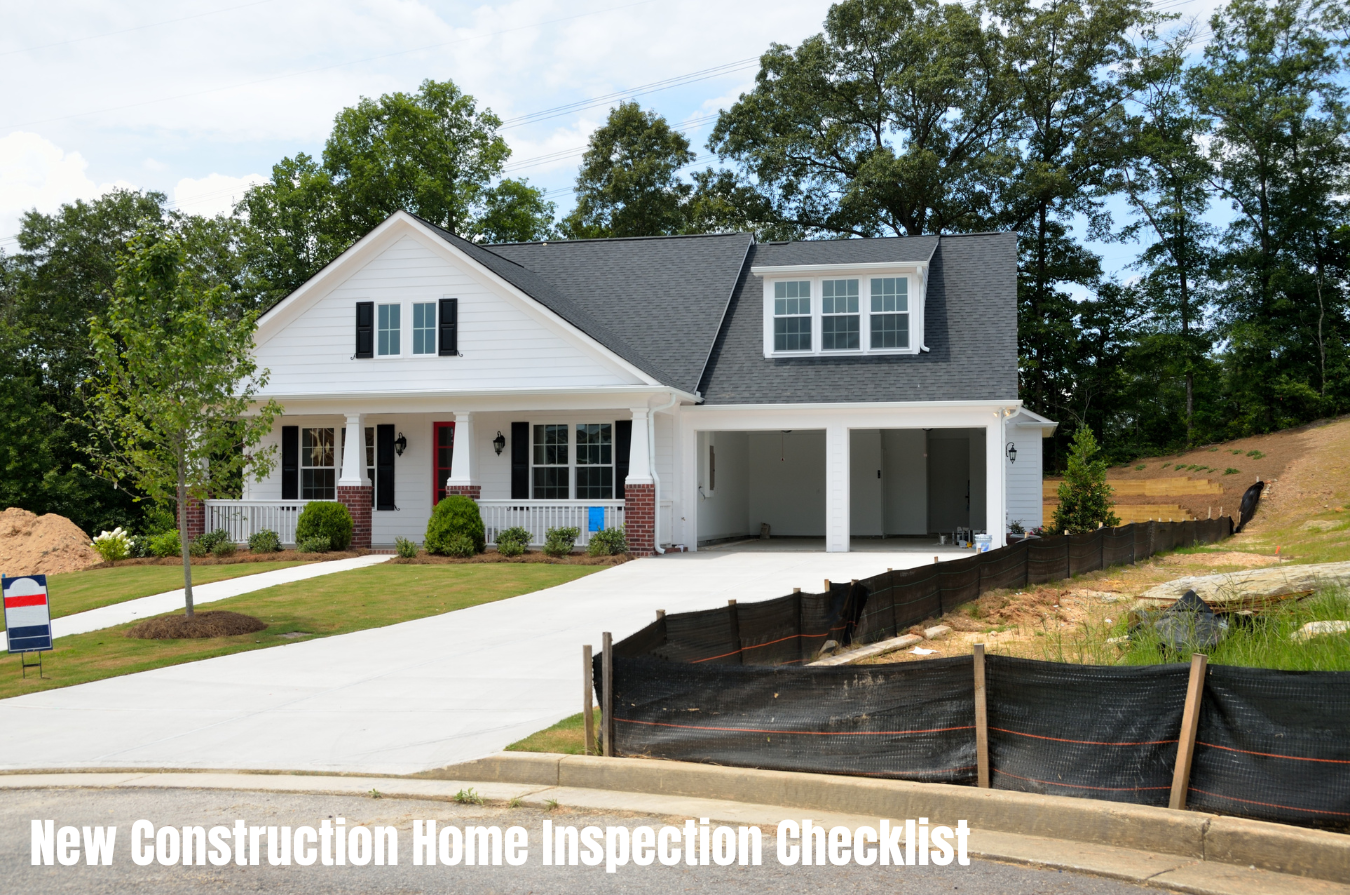
Specialized Inspections for Buyers and New Builds in Princeton, TX
Get a Clear Picture Before the Purchase
Walking through a pristine, freshly cleaned home during an open house doesn’t reveal the full story. What lies behind the walls, beneath the floors, or on top of the roof often remains hidden—unless a trained professional knows where to look. A pre-purchase home inspection makes those details visible. Buyers in Princeton, TX rely on Stonebriar Property Inspections to provide accurate, detailed evaluations of homes they’re considering. Every system—electrical, plumbing, HVAC, roof, foundation—is evaluated with objective, unbiased precision.
Here’s what a pre-purchase home inspection does for you:
- Reveals costly defects that sellers might not disclose or even be aware of.
- Strengthens your negotiating position if repairs or replacements are needed before move-in.
- Reduces long-term risk by identifying issues that could grow into expensive problems.
- Supports confident decision-making—because you know exactly what you’re buying.
Buyers often pay less than 1% of the home’s value for a full inspection but can discover underlying problems that might cost tens of thousands in future repairs. That’s real value, with zero guesswork.
Why Inspect a Brand-New Home? Here’s Why It Pays Off.
Builders miss things. Subcontractors take shortcuts. City inspectors don’t catch every mistake. New construction doesn’t guarantee perfection. In fact, many newly built homes hide issues ranging from poor grading and shoddy framing to miswired electrical outlets and incomplete ductwork.
Stonebriar Property Inspections inspects newly constructed homes in Princeton and the greater Dallas/Fort Worth area with a fresh set of eyes that don’t assume anything was done right unless proven otherwise. We conduct new construction home inspections at three critical stages—
- Pre-Drywall: Inspects framing, plumbing, electrical, and HVAC systems before walls are closed up.
- Final Walkthrough: Evaluates the build against safety and functionality benchmarks before you receive the keys.
- 11-Month Warranty: Takes advantage of the builder’s warranty period to document any developing defects.
This inspection process produces clear documentation of construction quality—and when necessary, leverage for getting repairs made before warranties expire or before closing. If your builder in Princeton asserts that a house is move-in ready, we put that claim to the test.
Whether you’re unlocking the door for the first time—or deciding whether to reach for those keys at all—you’ll want answers you can trust. That’s what Stonebriar delivers.
Clear, Concise, and Actionable: Your Princeton, TX Home Inspection Report
Timely, Thorough, and Built to Give You Answers
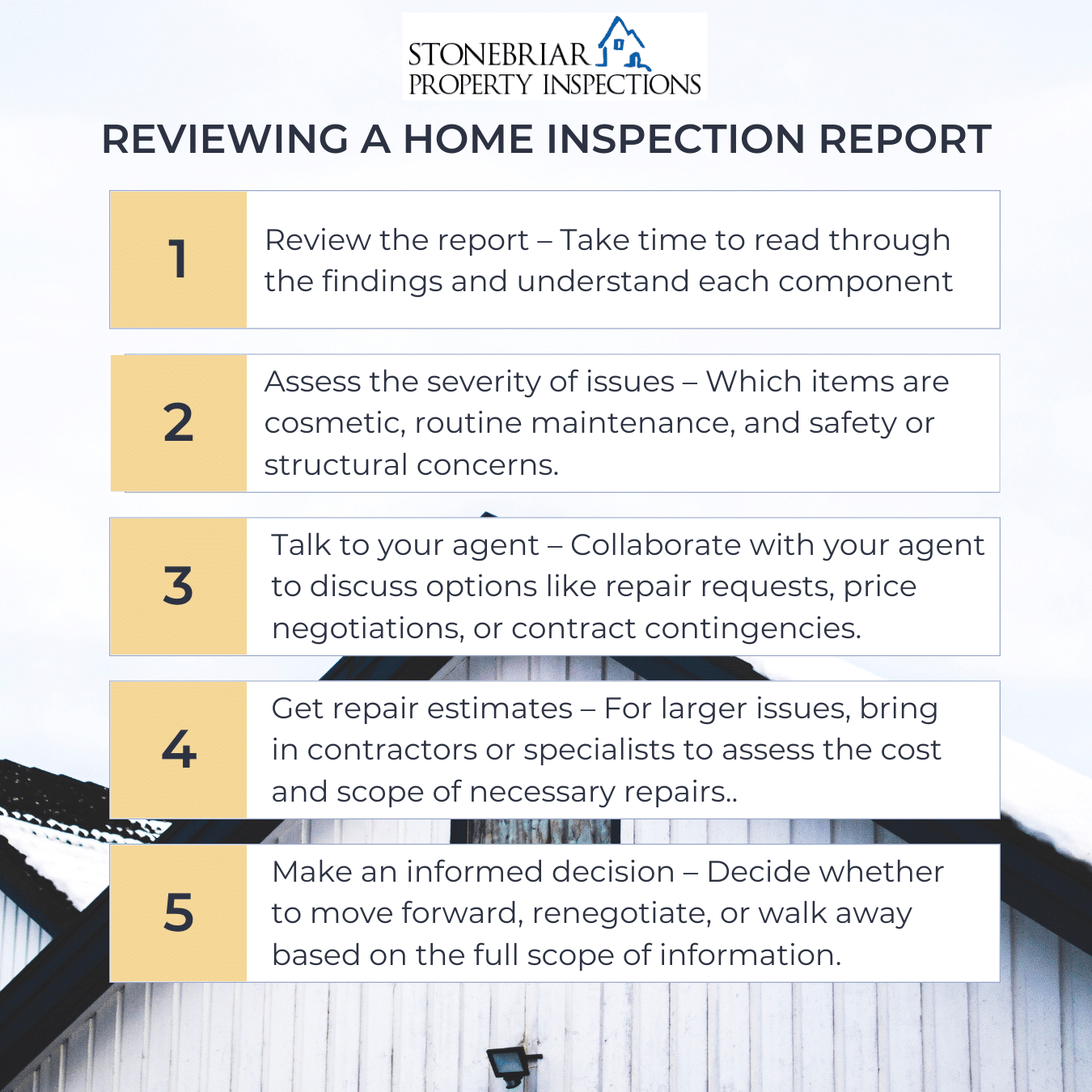
After every inspection, you’ll receive a detailed PDF report within 24 hours—no vague notes, no waiting around. This report isn’t just a checklist. It’s a visual, annotated guide to the condition of the home you’re buying or building in Princeton, TX or anywhere in the DFW metroplex. Whether you’re eyeing a historic craftsman bungalow or a fresh slab-on-grade construction, you’ll get specifics that matter.
What You’ll Find in the Report
- High-resolution annotated photos – Every major defect is supported by clear images with detailed descriptions placed right where they belong. See exactly what the inspector saw, from roof flashing gaps to water heater corrosion.
- Severity classifications – Not every issue carries the same weight. Our reports categorize each finding by its degree of urgency: Safety Concern, Major Defect, Minor Defect, Maintenance Item, or Upgrade Recommendation.
- Straightforward recommendations – For each issue—the next steps are spelled out. For example: Repair immediately, monitor over time, or consult a specialist.
Building Your Plan—Not Just Filling Gaps
The report goes beyond problem identification. With prioritized repair issues, you can zero in on what demands your attention right now. Our approach also includes forecasting short-term and long-term maintenance, helping you plan for expenses and avoid surprises. Thinking of negotiating with the seller or builder? Use the report as a powerful tool in your favor, backed by expert findings from Stonebriar Property Inspections.
And for new construction in particular, this is where overlooked builder shortcuts come to light. From missing insulation batts in the attic to misaligned drainage slopes, the report pinpoints what needs to be corrected before your final walkthrough.
Stonebriar Property Inspections delivers home inspection reports designed to inform—so you walk away empowered, whether you’re closing on a house in Princeton or checking in on a new build in Fort Worth.
Surprises Beneath the Surface: Common Issues We Uncover in Princeton Homes
Walk into any Princeton neighborhood, and you’ll see a mix of charming older homes and sparkling new builds. But even the most pristine-looking property can hide some costly problems. At Stonebriar Property Inspections, we’ve spent years uncovering the hidden truths inside homes across Princeton and the wider DFW area—and a few patterns have emerged.
Soil Shifts and Foundation Movement
In Princeton, the dry North Texas climate causes the clay-rich soil to expand and contract with seasonal moisture changes. That natural process leads to foundation issues, especially in properties built without proper slab design or site drainage preparation. During inspections, we’ve documented:
- Visible cracks in interior drywall and exterior brick
- Uneven or sloping floors, particularly in corner rooms
- Windows and doors that stick or won’t close properly
In several cases, our inspectors found active shifting—even in homes less than 10 years old.
HVAC Systems That Can’t Keep Up
Systems that once ran smoothly often lose efficiency over time. In older Princeton homes, HVAC units frequently show signs of wear from age and poor maintenance. But here’s the surprising part: even new homes sometimes have undersized systems or poorly insulated ductwork.
- Clogged evaporator coils and worn capacitors in older units
- Inconsistent airflow caused by unsealed or compressed ducts in new builds
- Inefficient thermostats still installed even after major renovations
Drainage Gone Wrong
Improper grading around the exterior or failing to extend gutters away from the house might not seem like a big deal—until water collects in the crawlspace. Water damage builds slowly but shows up dramatically:
- Persistent moisture in sub-floor insulation that leads to mold
- Warped wood joists affected by prolonged damp conditions
- Breakdown of vapor barriers under pier-and-beam homes
We’ve seen homes less than five years old suffer from chronic pooling due to ineffective swales or poorly placed downspouts. A few adjustments can stop the damage early, but only if caught in time.
DIY Renovations That Didn’t Pass the Test
The weekend warrior spirit is strong in this area, and many homeowners have taken on remodeling projects alongside pros. The result? Mixed results. Our team regularly uncovers the aftermath of enthusiastic projects carried out without permits or professional oversight:
- Bathroom additions missing proper venting or drainage pitch
- Rewired electrical systems using outdated or noncompliant connections
- Unsupported headers where load-bearing walls were removed
Looks good on the surface doesn’t mean it’ll pass inspection. If a DIY project cuts corners, it impacts resale value—and more importantly, safety.
Each Princeton home has a unique story, and often, the most valuable insights are hidden behind walls or beneath crawlspaces. That’s where Stonebriar Property Inspections comes in. With field-tested experience across Princeton and the greater Dallas/Fort Worth area, we document the real condition of every property—from 1970s ranch-style homes to brand-new construction on the edge of town.
How Our Home Inspection Service Works: From Booking to Final Report
Curious how the process plays out when you schedule a home inspection with Stonebriar Property Inspections? Here’s what to expect every step of the way, whether you’re buying a 5-bedroom two-story in Princeton or building a home from the ground up in DFW.
Step 1: Schedule Your Inspection
Booking is fast and straightforward. Use our online scheduler to choose a time that works for you, or give us a call if you’d prefer speaking directly to a local team member. Either way, you’ll get a confirmed appointment and a friendly reminder before the inspection date.
Step 2: On-Site Inspection (2–4 Hours)
We show up on time and ready to go.
- For most single-family homes in the Princeton area, our inspections take between 2 and 4 hours.
- Larger homes or new construction properties—especially those with three floors or unique layouts—can take a bit longer as more systems and components are evaluated.
- We encourage buyers to be present, though it’s not required. Tag along, ask questions, and see what we find in real-time.
Expect a thorough, room-by-room walkthrough—inside and out. Whether it’s the roofline, crawlspace, breaker panel, or newly installed HVAC system, nothing gets skipped. New construction homes are inspected just as carefully as older builds, and often with even more scrutiny. Why? Because rushed timelines leave room for missed steps by contractors and subcontractors.
Step 3: You Get the Full Report
Within 24 hours, you’ll receive a detailed digital inspection report. This document includes:
- Photographic evidence of findings
- Explanations in plain language—no cryptic codes or industry jargon
- Recommendations for action, prioritized by urgency
If anything’s unclear or you’d prefer to talk things through, we’ll schedule a follow-up Q&A by phone or Zoom. You bring the questions; we’ll walk you through each item line by line.
Step 4: Support After the Inspection
We don’t just drop off a report and disappear. Need help understanding which issues to fix first? Looking for trusted contractors to quote a repair? We stick around to help you make smart decisions—especially if you’re buying in a hot Princeton market where day-of decisions are expected. For new construction homes, we can spot code issues before drywall goes up and help you hold builders accountable on warranties.
This is what home inspection should feel like—straightforward, detailed, and local. Need it done right? Let’s get your inspection on the calendar.