
Stonebriar Property Inspections inspects homes throughout Uptown Dallas from our office on McKinney Avenue. Keith Boggs holds Texas Real Estate Commission license #9867 and has been inspecting North Texas homes since 2007, bringing more than 25 years in construction to the work.
Uptown is not like the rest of Dallas, and an inspection here is not like an inspection in a suburban subdivision. The housing stock runs from 1920s frame houses in the State-Thomas historic district, to townhomes built in the last decade, to high-rise condominium units — three entirely different building types, each with its own failure patterns, often within the same few blocks.
Older Homes in Uptown, Oak Lawn and State-Thomas
The pre-war and mid-century housing in and around State-Thomas, Oak Lawn and the Cedar Springs corridor brings a recurring set of findings. Knowing what to expect in a building of this age is most of what makes an inspection useful:
- Pier-and-beam foundations. Standard construction in Dallas before slab-on-grade took over in the 1960s. Where there is crawlspace access, the inspection covers sill plates, joists, piers, shims, ventilation and moisture. Where there is no access, the report says so plainly rather than implying the area was inspected.
- Cast iron and clay sewer lines. A ninety-year-old drain line is at or past the end of its service life. Corrosion and root intrusion are the usual findings, and neither is visible from inside the house — which is why we recommend a sewer scope on nearly every older Uptown property.
- Knob-and-tube and early wiring. Largely replaced by now, but remnants persist, frequently spliced into modern circuits inside walls where nobody has looked in decades.
- Galvanized supply piping. Corrodes internally and restricts flow long before it leaks. Where it remains, it is a planned replacement rather than an emergency — but it belongs in your budget, not in a surprise.
- Additions and renovations of uncertain provenance. Uptown property has been renovated repeatedly over a century. The question an inspection answers is not whether work was done, but whether it was done correctly and whether it was permitted.
Townhomes and Newer Construction
The infill townhomes built across Uptown over the past two decades are a different proposition. The systems are modern and the foundations are usually post-tension slabs, so the recurring findings shift toward construction quality rather than age: flashing and drainage at shared walls, grading that directs water toward rather than away from the structure, attic ventilation in tall narrow envelopes, and the workmanship questions that come with building fast on a small lot.
If the property is still inside its builder warranty period, a one-year builder warranty inspection is the most valuable inspection you will ever buy on it. Defects identified before the warranty expires are the builder’s problem. Defects identified afterward are yours.
Condominium and High-Rise Units
A condominium inspection is narrower in scope than a single-family inspection, and being clear about that boundary up front prevents the most common misunderstanding in this kind of purchase. We inspect what is inside the unit — the systems, fixtures, finishes and equipment the owner is responsible for. The building envelope, roof, common mechanical plant and structure are the association’s responsibility and sit outside the scope of a unit inspection.
Inside the unit, we examine:
- The HVAC equipment serving the unit, including condensate handling — the single most common source of damage claims in stacked construction
- Plumbing fixtures and supply connections, with particular attention to anything capable of damaging the unit below
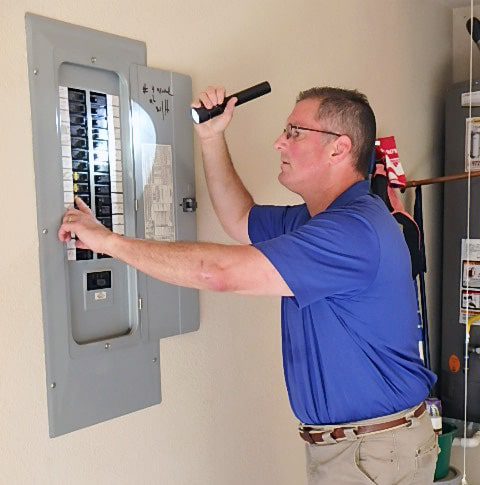
- The electrical panel, receptacles, GFCI protection and connected devices
- Windows, doors, finishes and any indication of water intrusion at the envelope
- Installed appliances
We will also tell you what we could not inspect, and why. A report that quietly omits what was inaccessible is worse than no report at all.
Inspections and Services That Matter Most in Uptown
Every Stonebriar inspection follows the Texas Real Estate Commission’s Standards of Practice, covering structural systems, electrical, heating and cooling, plumbing and installed appliances. On Uptown property, three additional services are worth considering more often than they are elsewhere:
- Sewer scope inspection. A camera run through the drain line to the city connection. On a house with original cast iron or clay, this is the difference between a known condition and a five-figure surprise in your first year of ownership.
- Zip Level foundation measurement. Precise elevation readings across the floor, which turn “the floor feels uneven” into a measured record of how much movement has occurred and where. Particularly useful on pier-and-beam construction and on any property where movement is disputed.
- Thermal imaging and infrared thermography. Reveals temperature differentials behind finishes — missing insulation, moisture intrusion, overheating electrical connections — in buildings where a century of renovation has hidden a great deal behind drywall.
What You Receive
Whether you are buying a 1925 frame house, a new townhome or a twentieth-floor unit, the inspection produces the same thing: a full written report with photographs, delivered within a day of the inspection (sometimes quicker). Every finding states what was observed, why it matters, and what it implies for the purchase. The report is written to be read by someone who is not a builder.
Findings are not inflated to justify the fee, and they are not softened to keep a transaction moving. You are paying for an accurate account of the building’s condition, and that is what you get.
Who We Inspect For
- Home buyers — a buyer’s inspection before the option period expires
- Sellers preparing to list — a pre-listing inspection, so surprises surface on your schedule rather than the buyer’s
- Condominium purchasers — unit-scope inspections, with the boundaries stated in writing
- Owners inside a builder warranty period — the one-year warranty inspection
- Current owners — annual home maintenance inspections
Our Uptown Dallas Office
Stonebriar Property Inspections
3232 McKinney Ave.
Dallas, TX 75204
(214) 923-7304
TREC License #9867
Our Other North Texas Offices
- Home inspections in Dallas — our primary Dallas office on Dallas Parkway, serving Far North Dallas, Addison and the Galleria area
- Home inspections in Frisco — Frisco and the surrounding Collin and Denton County communities
Schedule an Uptown Dallas Home Inspection
Call (214) 923-7304 or contact us to schedule. If you are not yet under contract and want to ask a question first, that is fine — we would rather answer it now than have you find out later.